Ksama Arora
Data Science Life Cycle
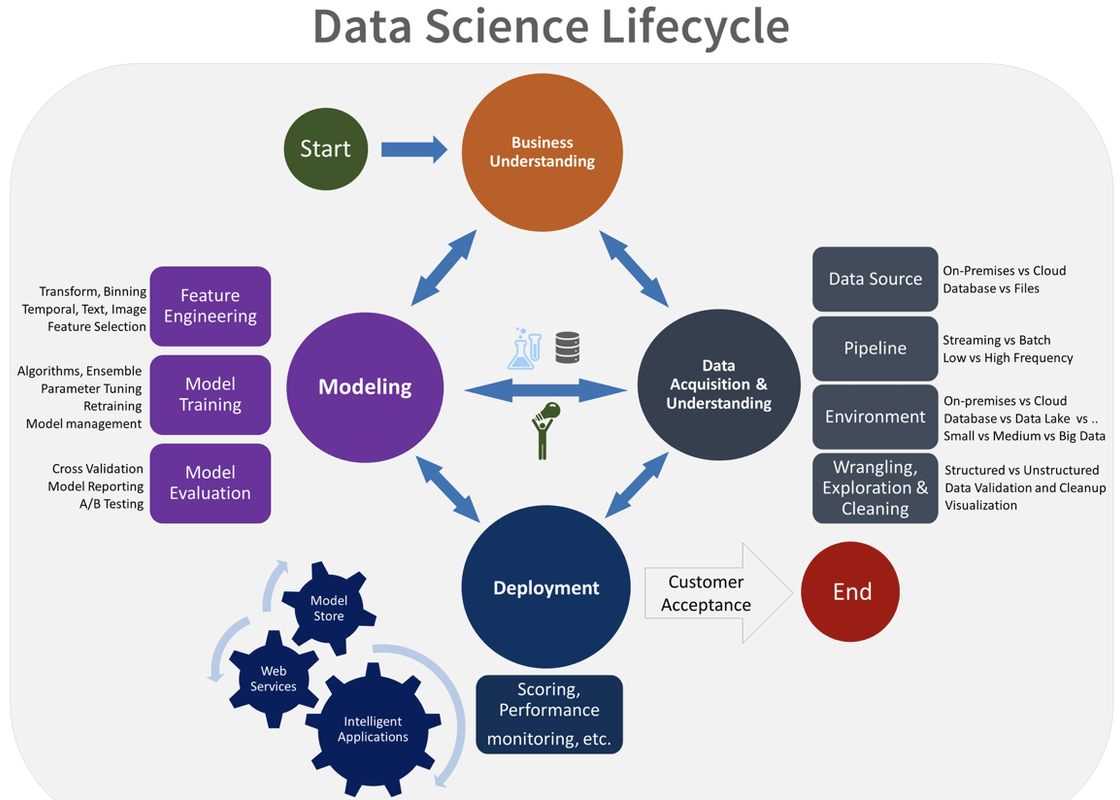
Business Understanding: This involves aligning decisions and product development with overarching goals, cost efficiency, and operational effectiveness.
- Data Acquisition and Understanding:
- This phase begins with gathering data from various sources like IoT devices.
- Next, we establish pipelines and consider the environment, typically a cloud-based setup.
- Data wrangling, exploration, and cleaning follow.
- Exploration involves delving into datasets such as consumer databases, examining past purchases, surveys, and customer details.
- Modeling:
- Feature engineering kicks off this phase, where we select relevant features to derive meaningful insights.
- Then, we train models by creating mathematical formulas that transform data into actionable results.
- Model evaluation compares the performance of cleaned datasets against manipulated ones to gauge model effectiveness.
Deployment: Deployment involves putting the model into production, this ensures accessibility for scoring and making predictions. Continuous monitoring of the model’s performance is essential post-deployment.
- Acceptance: Finally, the model undergoes acceptance testing to determine its suitability for consumer marketing efforts.
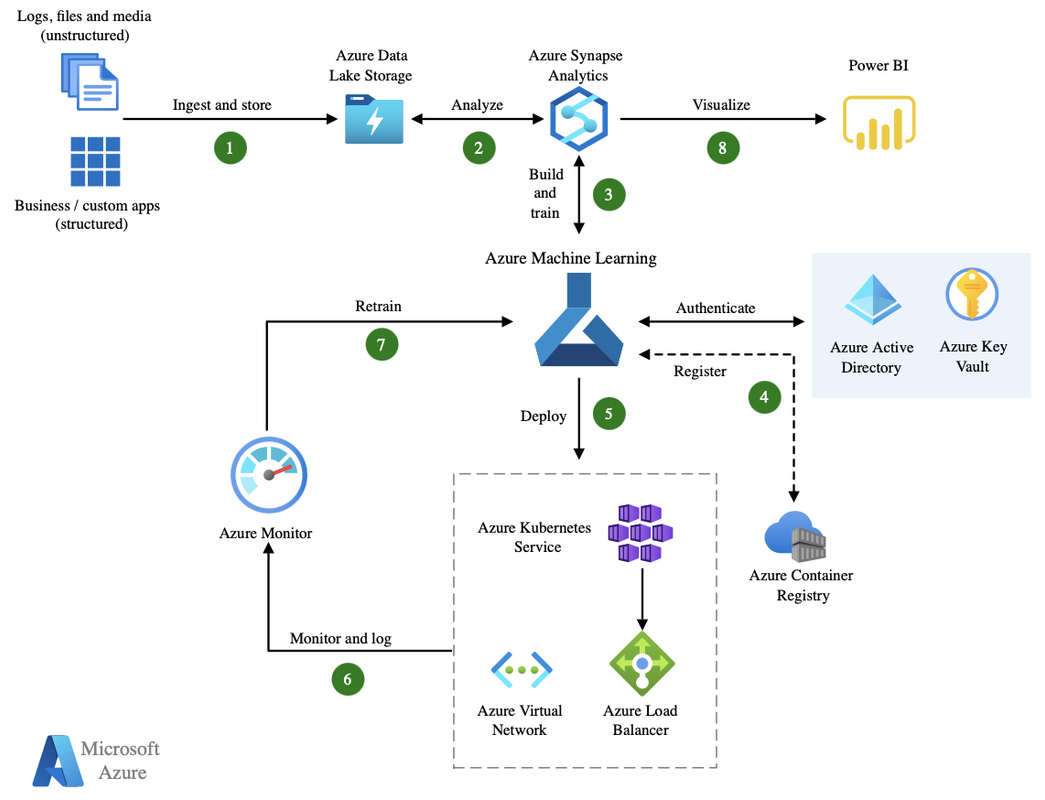
Azure Machine Learning Model